

Why is my garage floor still dusty after I sweep it?

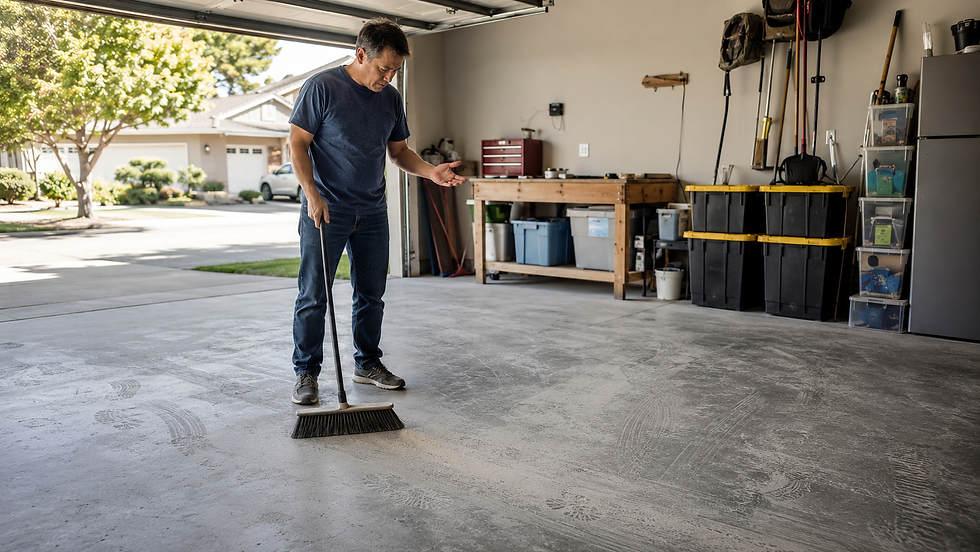
A dusty garage floor feels like a cleaning problem. You sweep. You vacuum. You rinse near the garage door. Then the dusty garage floor returns with gray powder on shoes, storage bins, tires, and the path into the house. At some point, the issue is often weak concrete surface paste, slab wear, moisture movement, or residue from an old coating. For San Jose and South Bay homeowners, the fix starts with diagnosis, not another broom.
Why Your Garage Floor Keeps Making Dust
A garage floor should not keep producing fine gray powder after normal cleaning. If dust returns within days, the slab surface deserves attention. Concrete dusting happens when the top cement paste becomes weak and breaks away under traffic. Sweeping removes loose material, but it does not strengthen the slab.
Your broom removes one layer of loose powder, then tires, storage racks, foot traffic, and rolling tool cabinets release more powder from the same weak surface. The floor looks clean for a short time, then the same gray film comes back.
In many South Bay homes, the garage is also the main entry point. Dust gets tracked into laundry rooms, kitchens, hallways, and stored holiday boxes.
If you want help from San Jose concrete floor specialists, the first step is finding out whether the dust is dirt, mineral residue, old coating failure, or concrete surface breakdown.
The Dust Is Often From The Slab
Fine gray powder usually points to concrete dusting. The slab is not dirty on top. The surface is releasing material.
Sweeping Does Not Repair Weak Paste
Brooms and shop vacs remove powder. They do not remove the cause. A weak surface needs prep, hardening, polishing, or coating based on slab condition.
What Concrete Dusting Means
Concrete has aggregate, sand, cement paste, and surface paste. The surface paste is the part you walk on, park on, sweep, and wash. When it is weak, the top layer turns chalky. This creates dust each time something abrades the surface.
Dusting often starts with how the slab was placed or finished. Excess mix water, bleed water worked back into the surface, poor curing, early freezing, heavy troweling, or low cement strength all reduce surface durability. Age and use make it worse. Tires, oil, road grit, garden tools, and storage movement wear garage slabs faster than protected interior floors.
The American Concrete Institute discusses slab construction, finishing, curing, and surface performance in its guide for concrete floor and slab construction. This matters because a dusty slab is often the result of surface quality, not homeowner neglect.
Weak Surface Paste Turns Into Powder
If the top paste is soft, traffic breaks it down. Sweeping removes loose powder, then fresh powder forms.
South Bay Garages Add More Stress
San Jose garages see seasonal rain, dry heat, hard water residue, car fluids, road grit, and daily traffic. Older slabs in Willow Glen, Almaden Valley, Los Gatos, Saratoga, Silver Creek, Cupertino, and Sunnyvale often show wear at tire paths and garage entries first.
Four Problems Mistaken For Garage Floor Dust
Not every dusty garage has the same cause. This is where many DIY fixes go wrong. The better move is to identify the type of residue first.
Normal dirt comes from shoes, wind, tires, pets, yard work, and open garage doors. It improves after cleaning and does not return from the slab itself.
Concrete dusting creates fine gray powder. It comes back because the concrete surface is wearing away.
White powder is often efflorescence. Moisture moves through the slab, carries salts or minerals upward, then leaves a white residue after evaporation. This matters because moisture affects coating decisions.
Old coating residue is another issue. Failing paint, old sealer, thin DIY epoxy, or leftover grinding dust creates loose material between the slab and any new coating.
A professional evaluation separates these problems before recommending epoxy, polyaspartic, polishing, densifier, or moisture mitigation.
Gray Powder Points Toward Surface Wear
Gray dust usually means cement paste breakdown or abrasion.
White Powder Points Toward Moisture
White powder deserves moisture review before coating. A coating over active moisture movement risks bubbling, whitening, or bond loss.
Why Paint Or Sealer Over Dust Fails
A coating system needs a clean, sound, profiled surface. If loose dust remains, the coating bonds to dust instead of concrete. The result is weak adhesion. The finish might look good at first, then tire heat, rolling loads, moisture, and daily traffic expose the failure.
This is why light cleaning is not enough for a dusty garage floor. Degreasing removes oil. Vacuuming removes loose powder. Mechanical prep does the real work.
Diamond grinding removes laitance, chalky paste, shallow contamination, old paint, and unstable surface material. The International Concrete Repair Institute explains surface preparation and profile concepts through its concrete repair and preparation resources.
Safety also matters. Grinding concrete without the right dust collection creates silica exposure risk. OSHA explains health risks linked with respirable crystalline silica on its silica safety page.
Bond Strength Starts With Prep
A coating system is only as reliable as the surface underneath it.
Dust-Controlled Grinding Protects The Home
Professional prep uses grinding equipment with vacuum collection. This helps control dust and keeps the project cleaner.
How Heavenly Touch Evaluates A Dusty Garage Floor
A good floor inspection starts with questions. Is the powder gray or white? Does it return after vacuuming? Does the slab feel chalky under your hand? Are tire paths darker, softer, or pitted? Is there old paint near the edges? Are there oil stains, cracks, moisture spots, or white residue near the garage door?
Heavenly Touch Stone Care looks at the slab before recommending a system. Some dusty floors need grinding and epoxy. Some need crack repair, moisture review, and a polyaspartic topcoat. Some dense slabs work better with surface refinement through concrete polishing.
Mohs hardness testing helps estimate surface hardness. A soft slab scratches more easily and needs a different prep plan than a dense slab. Grinding often starts with metal-bond tooling in lower grit ranges, then moves as needed based on surface removal, profile, and coating goal.
Inspection Comes Before Product Choice
The right system depends on dust source, slab hardness, cracks, oil, moisture, and daily use.
Garage Use Changes The Recommendation
Parking, gym equipment, storage shelves, bikes, laundry access, pets, and workshop use all affect coating choice and texture level.
Epoxy, Polyaspartic, Or Polished Concrete
Epoxy and polyaspartic coatings solve concrete dusting by sealing and protecting the prepared surface. The slab must be cleaned, mechanically prepared, repaired where needed, then coated with a system matched to use.
Epoxy is a strong base system for many residential garages. It wets into properly prepared concrete, creates a durable surface, and supports flake broadcast systems. A polyaspartic topcoat adds fast return-to-service, UV stability, abrasion resistance, and strong stain resistance. Many garage systems use epoxy as the base and polyaspartic as the wear layer.
For homeowners who want a clean, coated garage with easier maintenance, epoxy floor coatings are often the best route. The coating stops concrete powder from entering the home and makes sweeping easier.
Polished concrete works better on slabs with enough density and structural soundness. A badly dusting, pitted, moisture-affected garage slab often needs coating instead.
Epoxy Encapsulates The Surface
After prep, epoxy locks the surface under a protective coating.
Polyaspartic Improves Wear And Cure Speed
Polyaspartic topcoats cure fast and protect against abrasion, staining, and daily garage traffic.
San Jose Floors Need Local Product Judgment
San Jose garage floors face local conditions generic articles skip. Seasonal rain pushes moisture toward slab edges and garage doors. Dry heat follows. Cars bring in road grit. Hard water from rinsing vehicles or cleaning floors leaves mineral residue. Hillside homes in Los Gatos or Saratoga also face drainage-related slab moisture.
Coating selection must also respect California air rules. The California Air Resources Board publishes architectural coating VOC limit information, and the Bay Area Air Quality Management District regulates local coating use through architectural coating rules. These rules matter for odor, product choice, and proper installation.
Local judgment also means knowing when not to coat yet. Active moisture, soft concrete, failed paint, open cracks, or oil contamination needs correction first. A coating over a bad substrate creates short-term gloss and long-term failure.
Moisture Review Protects The Coating
Dark spots, white residue, edge moisture, and musty odor deserve attention before coating.
VOC Rules Affect Product Selection
California and Bay Area coating rules make product selection more important than a generic garage kit.
When To Call A Professional

Call for a professional evaluation when dust returns soon after sweeping, gray powder sticks to shoes, white residue appears near cracks, or old coating flakes under a scraper. These signs mean the slab needs more than household cleaning.
Call before buying a DIY coating kit if your floor feels chalky. A store-bought kit over weak concrete often fails because the floor was cleaned but not profiled. Once a failed coating peels, removal adds cost and time to the future repair.
A professional also helps match the finish to how you use the garage. Slip resistance, cleanability, flake density, and cure time all affect the final result.
Review prep, coating, cure time, and maintenance questions in the Heavenly Touch FAQs. If your floor keeps making dust, schedule a visit through Heavenly Touch Stone Care.
Fast-Returning Dust Is A Warning Sign
If the floor looks dusty again within days, the slab surface is likely part of the problem.
A Good Installer Tests Before Selling
The right recommendation comes from the floor, not from a premade script.
Conclusion
A garage floor still dusty after sweeping is often telling you something important. The slab surface might be weak, worn, moisture-affected, contaminated, or covered with residue from an old coating. More sweeping removes powder for a short time, but it does not fix the source.
Heavenly Touch Stone Care helps San Jose and South Bay homeowners identify the cause and choose the right repair path. For many dusty garage floors, the long-term answer is professional surface prep followed by epoxy, polyaspartic, polishing, densifier, or a tailored coating system.
If gray dust keeps coming back, stop chasing the symptom. Get the floor evaluated and fix the surface.
Frequently Asked Questions
Why is my garage floor dusty after I sweep it?
Your garage floor is dusty after sweeping because the concrete surface might be breaking down. Sweeping removes loose powder, but weak surface paste keeps releasing more dust under traffic.
How do I stop concrete dust in my garage?
The fix starts with finding the source. Mild dusting might need densifier or sealer. Heavy dusting often needs diamond grinding and bonded epoxy or polyaspartic coating.
Is white powder on my garage floor concrete dust?
White powder is often efflorescence, not concrete dust. It forms when moisture carries minerals or salts to the surface, then leaves residue after drying.
Will epoxy stop garage floor dusting?
Epoxy stops garage floor dusting when installed over properly prepared concrete. If epoxy goes over loose dust, oil, soft paste, or moisture problems, adhesion failure is likely.
Does a dusty garage floor need diamond grinding first?
Most dusty garage floors need mechanical preparation before coating. Diamond grinding removes weak paste, old coating residue, shallow contamination, and loose material so the coating bonds to sound concrete.
Is a dusty garage floor a sign of bad concrete?
It is not always bad concrete, but it is a sign of surface weakness or residue. A professional inspection separates simple dirt from dusting, efflorescence, coating failure, or moisture-related surface problems.



Comments